In late November 2025, as the ancient Elbe River lay quietly beside Hamburg, Germany, where countless maestros of Western classical music once left their footprints, a warm current of music from China arrived amid the thaw of the season’s first snow.
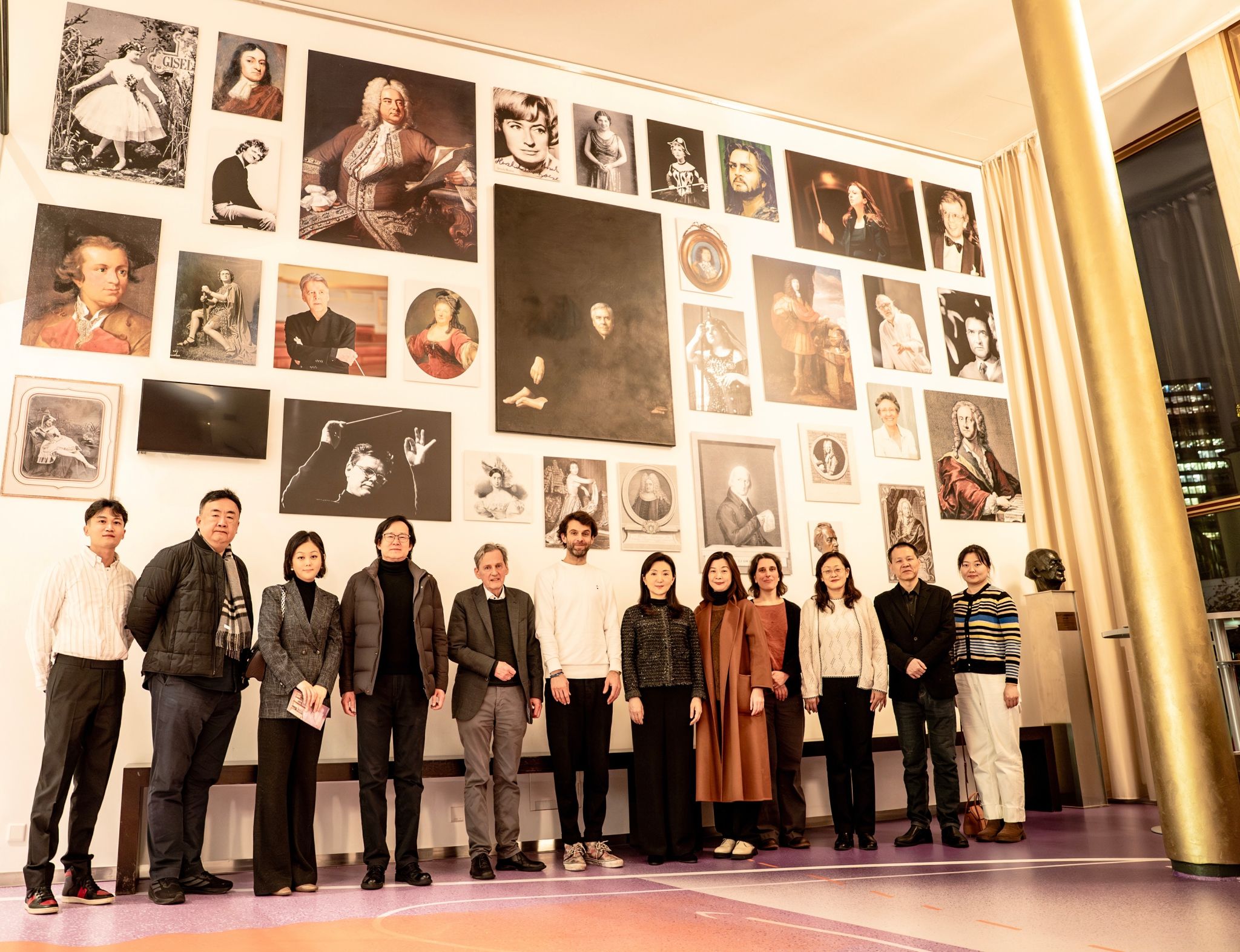
On November 27, 2025, local time, Professor Yu Hongmei, President of the Central Conservatory of Music (CCOM), led a delegation to Germany for a series of rich and far-reaching musical exchange activities. From the chamber music concert in the Laeiszhalle, to the academic lectures and partnership agreement at Hochschule für Musik und Theater Hamburg (HfMT, Hamburg University of Music and Theatre), and on to the frontier research visit at the Ligeti Center for Computer Music, this journey, across mountains and seas, was not only a display of musical artistry, but also a dialogue between Chinese and German cultures, and a vivid example of mutual learning between civilizations.
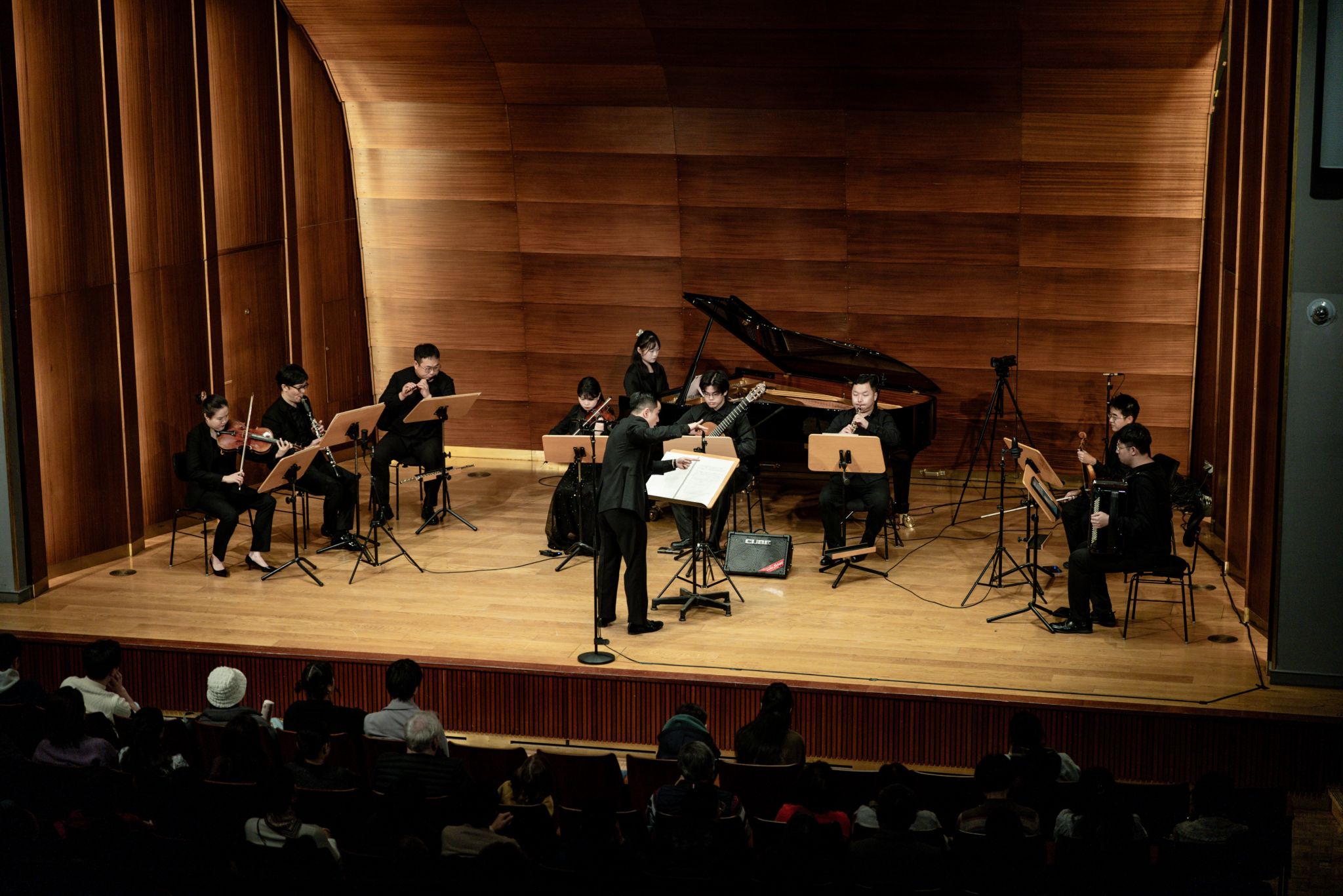
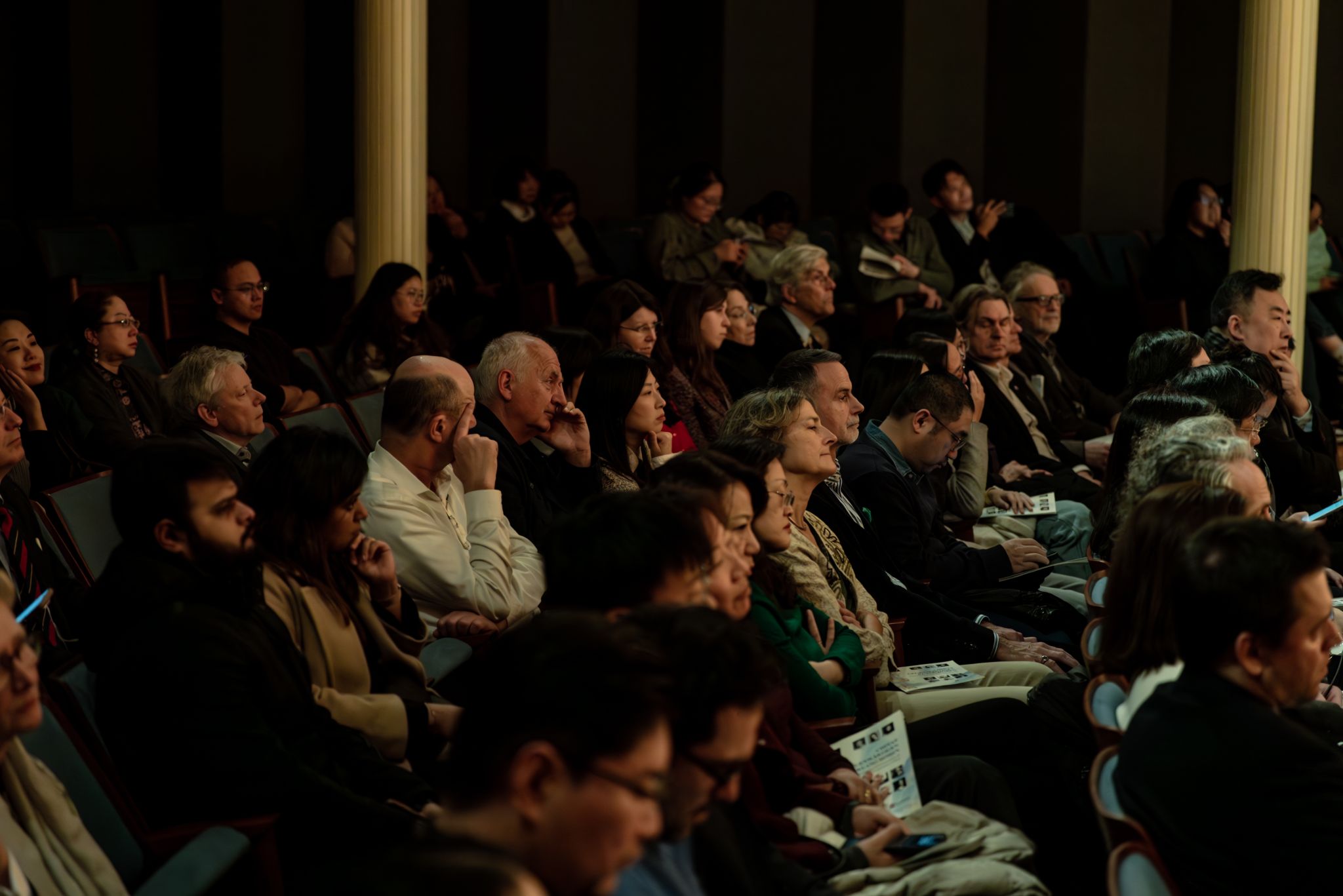
At 7:30 PM local time on November 27, 2025, the renowned Laeiszhalle Kleiner Saal welcomed a musical feast from the East for an audience of nearly a thousand people: Hearing Contemporary China: CCOM Composers’ Chamber Music Concert. Following successful performances in Vienna, New York, Milan, and Slovakia, this concert marked yet another heartfelt rendition of CCOM’s “Hearing Contemporary China” world tour in a city celebrated for its musical heritage.
The concert program, in order of performance, included: One-hued Horizons by Yu Mengshi, Music for Clarinet and Piano by Ma Yangzhi, Flowers on The Other Shore - III by Li Chenyao, Bipolar by Zhou Qiang, Threnody for Two Victims by Zhao Ye, Whispers in the Wind by Qian Qi, Without End by Ji Yu, Beyond Time by Chen Xiaolong, and Bone Moon #2 by Xie Tian. Nine compositions. Nine distinct voices. They collectively paint a musical portrait of China’s younger generation. Their works reflect both a deep reverence for folk melodies and natural landscapes, and a profound inquiry into the predicaments of human nature, the perception of time, and the cosmological mysteries.
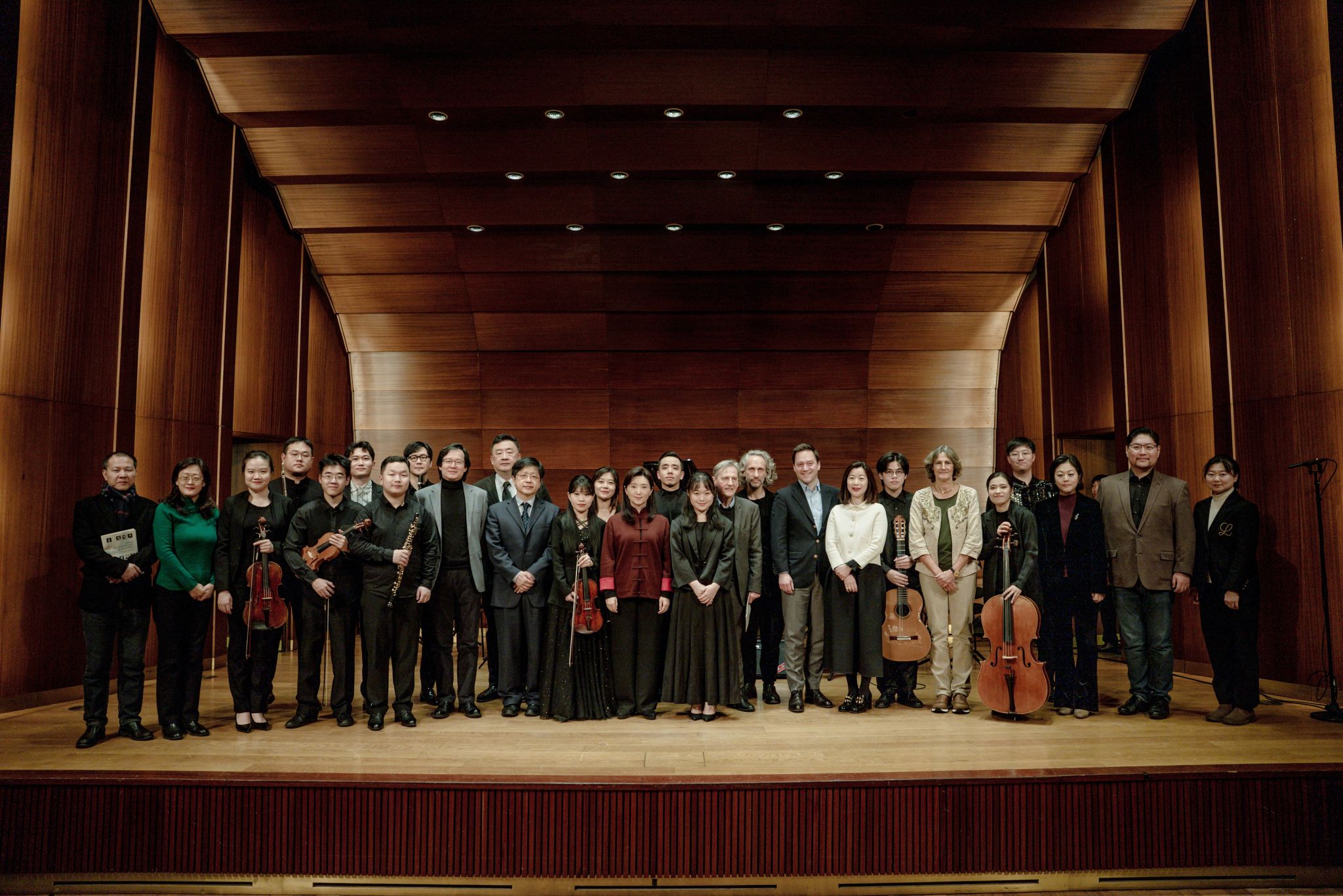
As the final note reverberated beneath the dome of the Laeiszhalle, the audience erupted into enthusiastic applause, a testament that what crosses borders is not just melodies but shared emotional resonance. The CCOM performers, with their superb artistry, showcased the music’s tension and subtlety to their fullest, allowing the Hamburg audience to truly experience the vigorous vitality and infinite charm of contemporary Chinese music. Mr. Lin Dong, Consul General of China in Hamburg, Professor Elmar Lampson, former President of HfMT, along with other distinguished figures from the Chinese and German cultural spheres jointly witnessed this historic moment.
If the concert was an “acoustic portrait of China”, then the series of academic exchanges conducted by the CCOM delegation in Hamburg on the same day represented a comprehensive dialogue of culture and art.
Upon the delegation’s arrival in Hamburg on the afternoon of November 26, local time, President Yu Hongmei led the team on a research visit to the Hamburg State Opera. Renowned for its bold and avant-garde productions, this world-class opera house warmly welcomed the delegation as they went backstage for in-depth dialogue with the Artistic Director, Manager, and other staff. The discussions covered the opera house’s production processes and rehearsal practices, and possibilities for future musical collaboration.
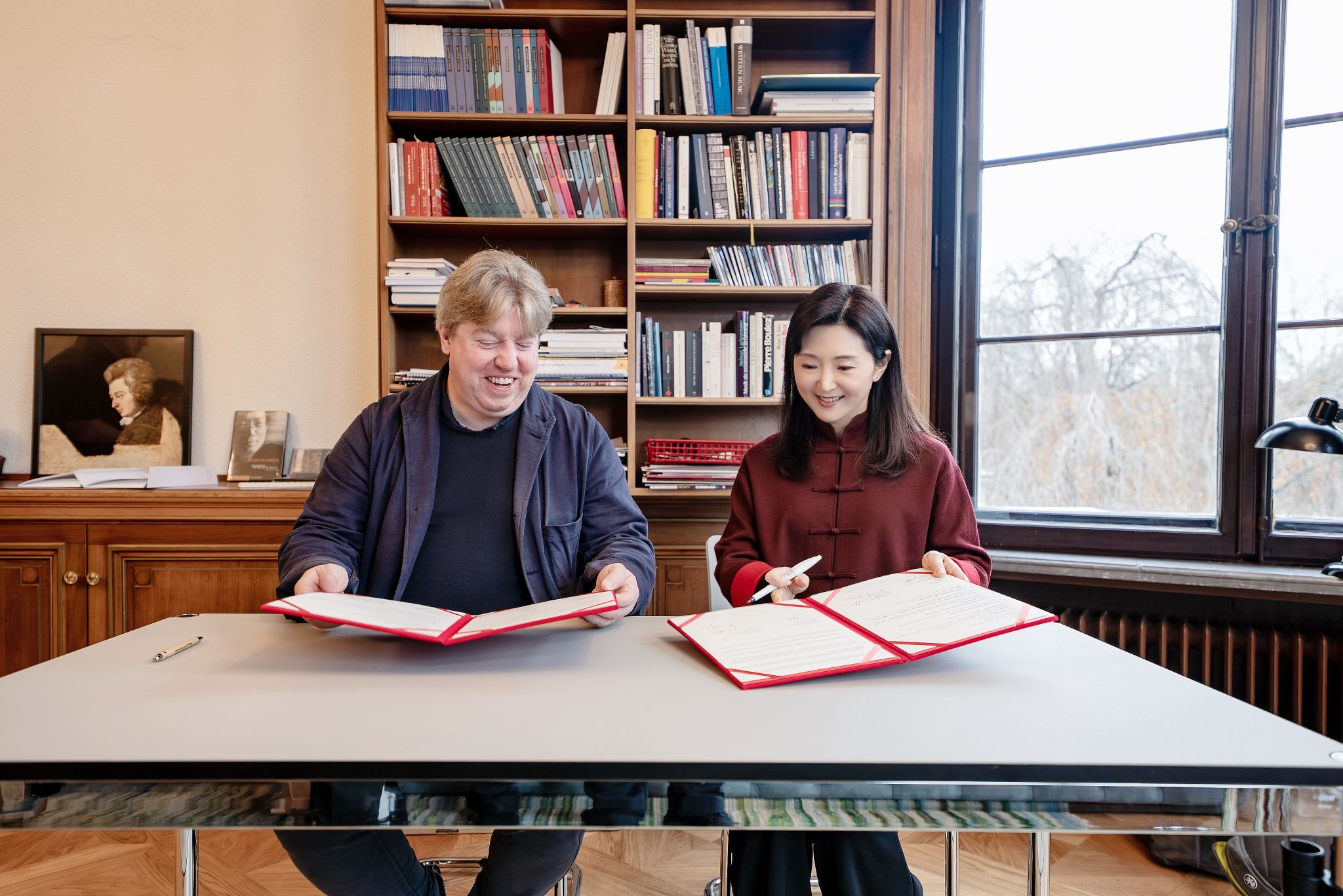
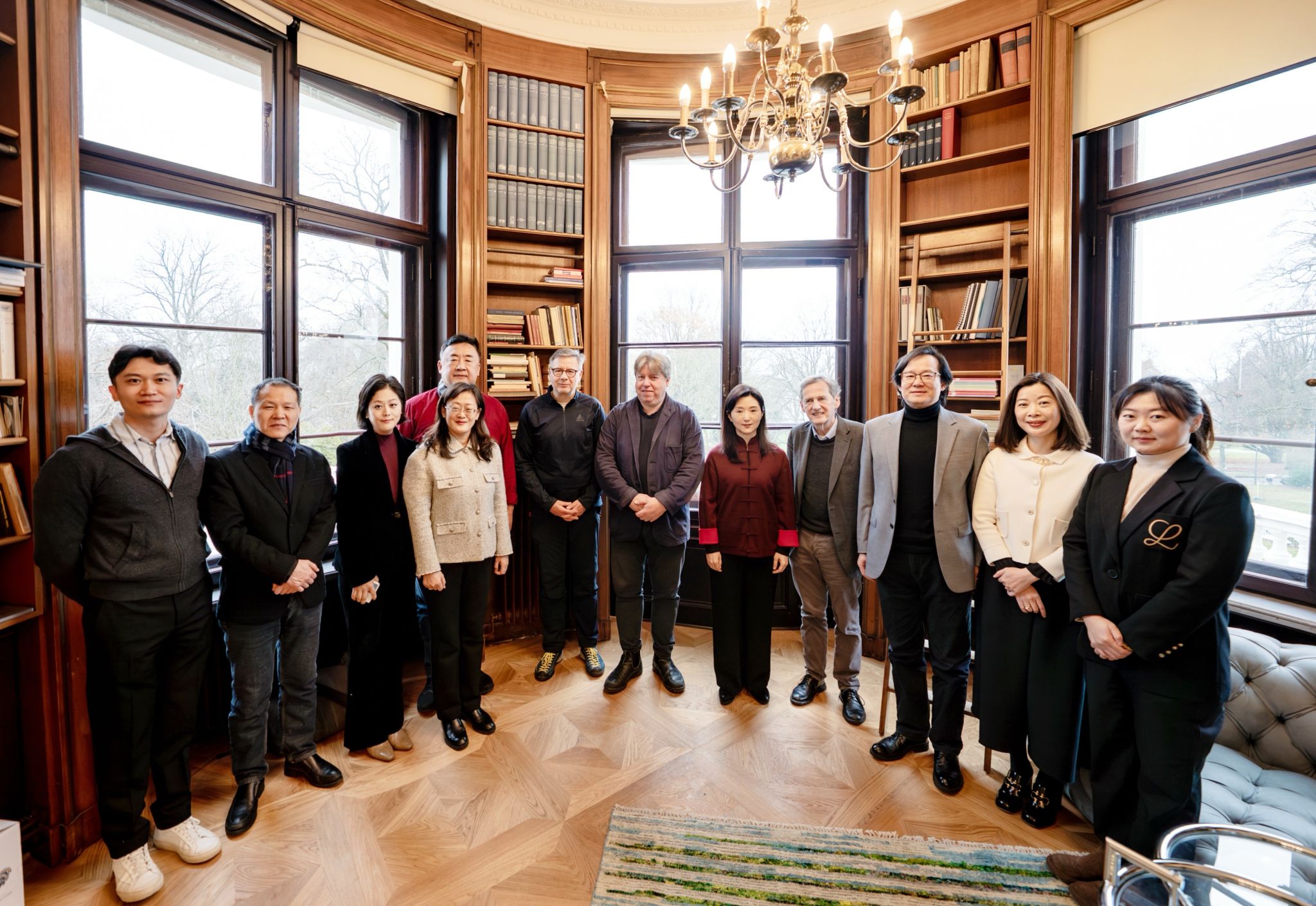
On the morning of November 27, President Yu Hongmei held talks with Professor Philipp Sprick, current President of HfMT, former President Elmar Lampson, and other representatives. In a warm and friendly atmosphere, the two sides renewed their inter-institutional partnership agreement. The signing of the new agreement marks the beginning of a new chapter in collaboration between the two leading conservatories in China and Germany. The two parties agreed to maintain their long-term and positive cooperation in music education and academic exchange and reached a consensus on deepened cooperation in specific areas such as student exchange programs and masterclasses in composition.
That same morning, Professor Qin Wenchen, Vice President of CCOM, and Professor Hao Weiya, Chair of the Composition Department of CCOM, were invited to deliver lectures on Chinese music composition in HfMT.
Professor Qin Wenchen delivered a profound lecture titled “Traditional Chinese Music in Contemporary Compositions”. Using his classic works such as The Border of Mountains and Towards a Far Place, he traced the cultural origins of his creative practice. He explained in a clear and engaging way how his compositions draw nourishment from Chinese folk music. Professor Hao Weiya, in turn, presented an overview of the educational framework of the CCOM Composition Department, showcasing to his German counterparts its rigorous pedagogical system and its spirit of openness.
On the afternoon of November 27, President Yu Hongmei and her delegation made a special visit to the Ligeti Center for Computer Music in Hamburg. Named after the avant-garde composer György Ligeti, this research center represents the forefront of European electronic music and acoustic research. Mr. Georg Hajdu, the Center’s director, warmly received the visiting group from CCOM. The Center’s artists showcased their latest research findings in areas such as XR virtual music space and new electronic music composition. Delegation members and the Center’s team engaged in in-depth exchanges on topics including the integration of technology and art, the future development of electronic music, and possibilities for interdisciplinary collaboration.
From the brilliant melodies at the Laeiszhalle to the official signing of the partnership agreement between the two institutions; from the insightful wisdom shared in the academic halls to the collision of ideas at the technological frontier—the CCOM delegation’s trip to Hamburg unfolded like a multi-movement symphony of refined structure and rich meaning. Using music as its medium, it successfully built a bridge in Hamburg, on the banks of the Elbe—one that connects history with the future, unites art with technology, and spans cultural and national borders.
This was not merely a successful cultural and academic exchange event, but also a vivid reflection of CCOM’s endeavors in promoting Chinese musical culture onto the global stage. It showcased the responsibility and commitment of CCOM, China’s top music institution, in promoting cultural prosperity and enhancing cultural confidence. Although the final note eventually faded by the Elbe River, the echoes it stirred will long remain in the hearts of Chinese and German musicians, transforming into a prelude for future, deeper-level collaborations. This symphony—composed of communication and cooperation—allows us to look confidently ahead toward a future where Chinese musical culture takes its place at the center of the world stage.